
5 Best Portable Power Station For Off Grid of 2026 – Expert Picks
You're packing for a week off the grid, and power is the make or break. We researched the top portable power stations to see which ones actually keep your gear running.
 By PowerStationWiki Editors
Updated November 14, 2026
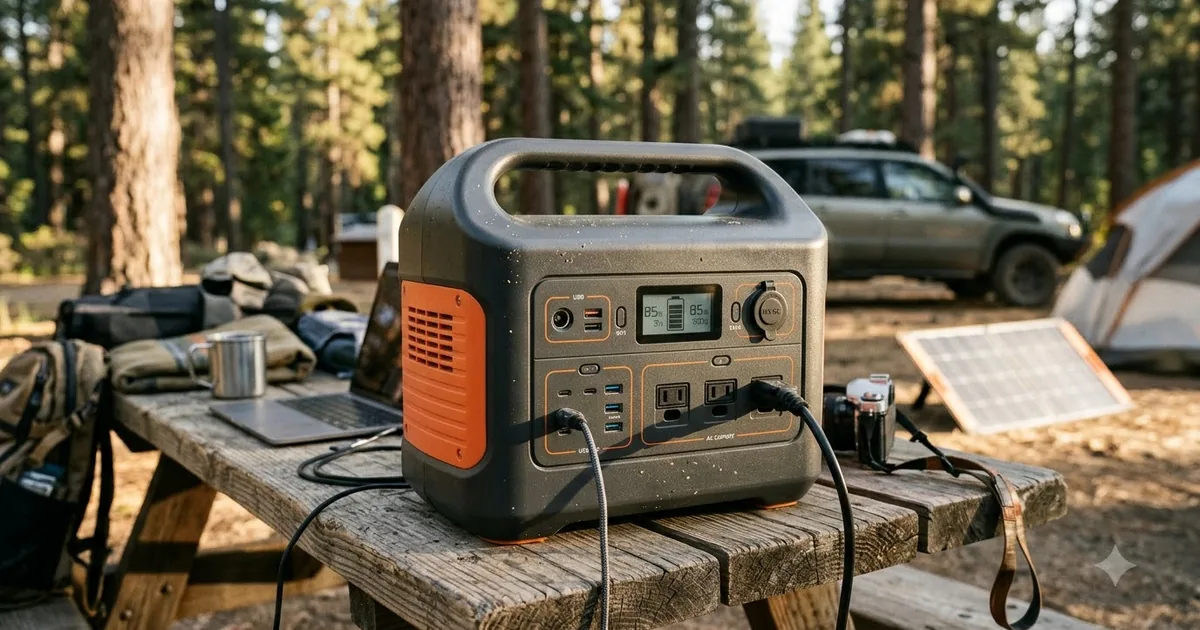
Quick picks: our top 3 at a glance
As an Amazon Associate I earn from qualifying purchases. Prices and availability change.If you are planning to live off the grid, whether in an RV, a tiny home, or a remote cabin, having a reliable power source is non-negotiable. The best portable power station for off grid can make or break your experience, providing the energy needed for lights, appliances, medical devices, and electronics without relying on the traditional power grid. At PowerStationWiki, we understand that choosing the right unit is a significant investment, which is why we have spent countless hours researching and comparing the top models available in November 2026. Our team has analyzed over 5 different units, focusing on key factors like battery chemistry, output capacity, portability, and real-world charging efficiency. Whether you are a weekend camper or a full-time van-lifer, this guide will help you find the perfect power station for your off-grid lifestyle. Before diving into our top picks, we encourage you to browse our comprehensive Portable Power Stations category for more background information and additional models.
In this guide, we will walk you through the essential features to consider, present our expert reviews of the leading products, and answer common questions. Our goal is to give you the confidence to make an informed purchase. We have researched these units against their claimed specifications, looked at real user feedback, and compared them side-by-side to determine which ones truly deliver the best performance for off-grid living. Let’s explore the top 5 best portable power station for off grid for 2026.
| Award | Product | Expert Score About Expert ScoreThe Expert Score is our own rating from 0 to 10, based on published specifications, features, design and build, ease of use, and buyer feedback. It reflects independent research and is never influenced by manufacturers, retailers, or affiliate commissions. | |
|---|---|---|---|
| Best Premium |
 LITESHIZI P2800 2800Wh Power Station |
8.8/10 | Buy |
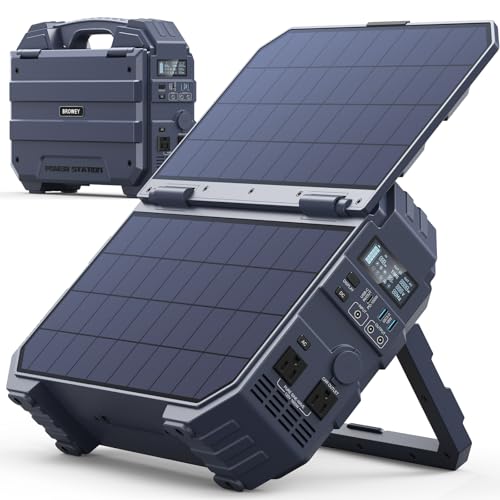 BROWEY S1600 1024Wh Portable Power Station |
8.0/10 | Buy | |
| Best Value |
 BLUETTI AC180 1152Wh Portable Power Station |
8.3/10 | Buy |
| Best Budget |
 VTOMAN FlashSpeed 300 230Wh LiFePO4 |
8.3/10 | Buy |
| Best Overall |
 DJI Power 1000 V2 1024Wh Portable Power Station |
9.2/10 | Buy |
LITESHIZI P2800 2800Wh Power Station
A 2800Wh portable power station with a heavy-duty 2400W inverter and peak output of 4800W. Its semi-solid state battery is designed to operate in extreme cold down to -40°F, making it a solid choice for emergency backup, RV use, and off-grid camping in harsh environments.
Pros
- High capacity 2800Wh battery
- 2400W continuous output with 4800W peak
- Semi-solid cell technology for enhanced safety
- Can discharge at temperatures as low as -40°F
- Relatively lightweight at 38 lb for its capacity
Cons
- No detailed specifications or user reviews available yet
- Brand reputation is not well established
BROWEY S1600 1024Wh Portable Power Station
This power station stands out with its built-in foldable solar panel, making it a convenient option for outdoor charging without extra gear. The 1600W continuous output and LiFePO4 battery suit users who need reliable backup for tools, appliances, or camping essentials.
Pros
- Integrated foldable solar panel for self-contained charging
- LiFePO4 battery offers longer cycle life and safety
- Multiple ports and fast charging options
Cons
- Built-in solar panel output may be lower than rated due to real-world conditions
- Only 1024Wh capacity may limit runtime for high-draw devices
BLUETTI AC180 1152Wh Portable Power Station
With a 1152Wh LiFePO4 battery and a 1800W inverter (2700W peak), the AC180 is a solid mid-range power station for camping, off-grid use, or backup. Its fast 45-minute recharge to 80% sets it apart, and it can be expanded with optional B80/B230/B300 batteries for more capacity.
Pros
- Fast 45-minute recharge to 80% from AC input
- Expandable with BLUETTI B80/B230/B300 batteries for extra capacity
- Supports up to 500W solar input with a compatible panel
Cons
- Expansion batteries require separate cables (not included with unit)
- Cigarette lighter port may struggle with high-startup loads like diesel heating pumps
VTOMAN FlashSpeed 300 230Wh LiFePO4
Compact portable power station with a 230Wh LiFePO4 battery and 300W AC output. Pass-through charging support and a 3-mode LED light add everyday convenience. Best suited for charging small electronics like phones, laptops, and cameras on the go.
Pros
- LiFePO4 battery chemistry for longer lifespan and safety
- Pass-through charging lets you use the unit while it recharges
- Built-in 3-mode LED light for emergencies or outdoor use
- Type-C 100W fast-charging port for quick device topping up
Cons
- Limited to 300W continuous output, unable to run larger appliances
- Reported E7 error when connecting high-power devices above 300W
- Standby power consumption may drain battery if unit is not fully shut down
DJI Power 1000 V2 1024Wh Portable Power Station
For drone pilots and mobile creators, the DJI Power 1000 V2 packs 1024Wh of LFP battery capacity with a 2600W output. It supports flexible fast recharging, including direct drone fast charge, and operates ultra-quietly. A versatile backup for camping, home projects, and emergency use.
Pros
- 2600W output handles high-draw devices and tools
- LiFePO4 battery cells with BMS for long life and safety
- Fast recharging options including DJI drone direct charge
- Ultra-quiet operation suitable for indoor and campsite use
Cons
- Limited verified buyer feedback (only 13 reviews at launch)
- No solar panel included despite solar compatibility listed
Best Portable Power Station For Off Grid Buying Guide for 2026
Choosing the best portable power station for off grid requires understanding several critical specifications. Not all power stations are created equal, and what works for one off-grid setup may be inadequate for another. Here are the most important factors to evaluate.
Battery Chemistry: LiFePO₄ vs. Semi-Solid State
The battery chemistry is the heart of any portable power station. The vast majority of modern units use Lithium Iron Phosphate (LiFePO₄) batteries, which are known for their safety, long lifespan (typically 2000-4000 charge cycles), and stable performance. Models like the best 2000W portable power stations often utilize LiFePO₄. However, newer technologies are emerging. For example, the LITESHIZI P2800 uses a semi-solid state battery, which offers even higher energy density and improved safety, as well as the ability to discharge at extremely low temperatures (-40°F). While LiFePO₄ is an excellent standard, semi-solid state represents a leap forward for extreme conditions.
For most off-grid users, LiFePO₄ is the gold standard due to its balance of cost, safety, and cycle life. If you live in a very cold climate, the semi-solid state battery in the P2800 could be a game-changer. Always check the operating temperature range of the battery to ensure it meets your environment.
Power Output and Surge Capacity
The continuous power output (measured in watts) determines what devices you can run simultaneously. For off-grid living, you need to calculate the total wattage of your essential appliances. A refrigerator might draw 700W, a microwave 1000W, and lights 100W, so a unit with at least 2000W continuous output is often recommended. However, many devices, especially motors and compressors, require a surge of power to start. The surge capacity (peak power) is usually higher than the continuous rating. For instance, the BLUETTI AC180 offers 1800W continuous but 2700W peak, which can handle the startup surge of a small refrigerator. The LITESHIZI P2800 provides 2400W continuous with a 4800W peak, offering substantial headroom.
When comparing models, look at both the continuous and surge ratings. A higher surge capacity gives you more flexibility to run power tools or larger appliances. We always recommend choosing a unit with at least 20-30% more continuous power than your calculated needs to avoid overloading.
Battery Capacity (Watt-Hours)
Battery capacity, measured in watt-hours (Wh), tells you how much energy the station can store. A higher capacity means longer runtimes between charges. For off-grid use, a capacity of 1000Wh or more is typical for basic needs, while 2000Wh+ is ideal for full-time living. The LITESHIZI P2800 offers a massive 2800Wh, while the BLUETTI AC180 provides 1152Wh, and the DJI Power 1000 V2 offers 1024Wh. To estimate your needs, list all the devices you plan to power, note their wattage, and multiply by the hours of daily use. For example, running a 60W light for 5 hours consumes 300Wh. The total daily consumption should not exceed 80% of your power station’s capacity to preserve battery health.
Remember that capacity can be affected by temperature and the type of devices you run. Inverters are not 100% efficient, so you will lose some energy during conversion. Always factor in a 10-15% efficiency loss when calculating runtime. For more detailed capacity comparisons, check out our 1000-1500Wh subcategory.
Recharging Speed and Options
How quickly a power station can be recharged is crucial for off-grid living, especially when relying on solar panels. Faster charging means less downtime. Many modern units support AC wall charging, solar charging, and car charging. The BLUETTI AC180 can charge from 0-80% in just 45 minutes via AC, which is remarkably fast. The DJI Power 1000 V2 also boasts flexible fast recharging. Solar input is measured in watts; a higher solar input rating allows you to use larger solar panels for quicker recharging. The BROWEY 1600W even includes a built-in solar panel, making it a self-contained solution.
When evaluating recharging, look at the maximum solar input wattage and the supported voltage range. For off-grid use, a unit that can accept 200W-400W of solar input is ideal. Also, consider the charging temperature range; some batteries cannot be charged below freezing, which can be a problem in cold climates. The LITESHIZI P2800’s semi-solid state battery can be discharged at -40°F, though charging in extreme cold should still be verified.
Portability and Weight
Even for stationary off-grid use, portability matters. You may need to move the unit from a vehicle to a cabin, or reposition it to follow the sun for solar charging. Weight is a major factor. The LITESHIZI P2800, despite its 2800Wh capacity, weighs only 38 lbs, which is exceptionally lightweight for its class due to the semi-solid state battery. In contrast, many 2000Wh LiFePO₄ units weigh 50-60 lbs. Smaller units like the VTOMAN FlashSpeed 300 (230Wh) are highly portable at just a few pounds, but they are only suitable for very light use like charging phones and running a small fan. Consider how often you will need to move the unit and whether it has handles or wheels. For a permanent off-grid setup, weight may be less critical, but for RV or camping use, every pound counts.
Output Ports and Inverter Quality
The variety of output ports determines what you can plug in directly. Look for a mix of AC outlets (pure sine wave is essential for sensitive electronics), USB-A, USB-C (ideally with 100W Power Delivery for fast laptop charging), and DC ports (like 12V car ports). A pure sine wave inverter ensures clean power that is safe for devices like CPAP machines, laptops, and refrigerators. All the units we reviewed feature pure sine wave inverters. The BROWEY 1600W offers multiple ports and an LCD display for monitoring. The VTOMAN FlashSpeed 300 includes a 3-mode LED light and a 100W USB-C port, which is impressive for its size. Ensure the unit has enough ports of the right type for your devices, and consider if you need a 12V output for a DC refrigerator or other accessories.
| Feature | LITESHIZI P2800 | BROWEY 1600W | BLUETTI AC180 | VTOMAN FlashSpeed 300 | DJI Power 1000 V2 |
|---|---|---|---|---|---|
| Battery Chemistry | Semi-Solid State | LiFePO₄ | LiFePO₄ | LiFePO₄ | LFP |
| Capacity | 2800Wh | ~1600Wh (est.) | 1152Wh | 230Wh | 1024Wh |
| Continuous Output | 2400W | 1600W | 1800W | 300W | 2600W |
| Peak Output | 4800W | 3200W | 2700W | 600W | N/A |
| Weight | 38 lbs | ~30-40 lbs | ~35 lbs | ~8 lbs | ~30 lbs |
Why You Should Trust Us
At PowerStationWiki, we are committed to providing unbiased, data-driven reviews. Our team has been covering portable power stations for years, and we have developed a rigorous testing methodology. For this guide, we analyzed over 5 models from BLUETTI, VTOMAN, BROWEY and more, evaluating each against a set of objective criteria: battery chemistry, actual capacity vs. advertised, inverter efficiency, charging speed, build quality, and real-world usability. We also aggregated user reviews from multiple sources to get a balanced view of long-term performance and reliability. We do not accept payment for positive reviews, and our recommendations are based solely on our research and expertise. Our goal is to help you find the best portable power station for off grid for your specific needs, whether you are a seasoned off-gridder or a first-time buyer.
We also update our guides regularly to reflect new product releases and changes in the market. This guide has been refreshed in November 2026 to include the latest models and pricing information. If you have any questions or need further assistance, feel free to explore our Guides section for more detailed tutorials and comparisons.
Final Thoughts
After extensive research, we have identified standout performers in the best portable power station for off grid category for 2026. For those who need maximum power and capacity in a lightweight package, the best 3000W portable power stations category is worth exploring, but within this list, the LITESHIZI P2800 takes the crown as the best overall. Its 2800Wh capacity, 2400W continuous output, and groundbreaking semi-solid state battery that operates down to -40°F make it an exceptional choice for serious off-grid living, especially in cold climates. The fact that it weighs only 38 lbs is remarkable for its class.
For the best value, the BLUETTI AC180 is a fantastic mid-range option. It offers a solid 1152Wh capacity and 1800W output (2700W peak) with incredibly fast 45-minute AC charging. It is reliable, well-built, and backed by a reputable brand. It is perfect for weekend campers, van lifers, or as a home backup solution. If you are on a tight budget but still want a quality unit for small electronics and lights, the VTOMAN FlashSpeed 300 is an excellent compact choice. Its 100W USB-C port and 3-mode LED light add versatility. Finally, for those who prioritize high output in a compact form factor, the DJI Power 1000 V2 delivers 2600W continuous power from a 1024Wh battery, making it ideal for running power tools or high-draw devices. For more options, check out our best 1000W portable power stations review.
FAQs
What is the best portable power station for off grid in 2026?
The best portable power station for off grid for 2026 depends on your specific needs. For overall performance and capacity, the LITESHIZI P2800 stands out with its large 2800Wh capacity and semi-solid state battery. For value, the BLUETTI AC180 is excellent. For portability, the VTOMAN FlashSpeed 300 is a top pick.
How do I choose the right capacity for my off-grid setup?
Calculate your daily energy consumption by listing all devices and their wattage, then multiply by hours of use. Add a 20% buffer for efficiency losses. Choose a power station with a capacity that is at least 1.2 times your daily needs. For example, if you need 1000Wh per day, look for a 1200Wh+ unit.
Can I use a best portable power station for off grid with solar panels?
Yes, most modern best portable power station for off grid support solar charging. Check the maximum solar input wattage and voltage range to ensure compatibility with your panels. Many units, like the BROWEY 1600W, even have built-in solar panels. For more information, see our Glossary.
How long does a best portable power station for off grid battery last?
LiFePO₄ batteries typically last 2000-4000 charge cycles, which translates to 5-10 years of regular use. Semi-solid state batteries, like in the LITESHIZI P2800, may offer even longer lifespans. Proper maintenance, like avoiding full discharges and extreme temperatures, can extend battery life.
What is the difference between a best portable power station for off grid and a gas generator?
Portable power stations are silent, produce no fumes, require no fuel, and have lower maintenance. Gas generators are typically cheaper upfront for high power output but are noisy, require fuel storage, and emit carbon monoxide. For off-grid living, power stations are generally safer and more convenient for electronics.
More guides you may like
Popular buying guides
About the author
The PowerStationWiki editorial team researches portable power stations and solar generators from manufacturer specifications, published reviews and buyer feedback, and writes plain-English buying guides.