
5 Best Backup Battery For Home Computer of 2026 – Expert Picks
Your home computer is only as reliable as its power source. These backup batteries keep your system running through any outage.
 By PowerStationWiki Editors
Updated November 12, 2026
Quick picks: our top 3 at a glance
As an Amazon Associate I earn from qualifying purchases. Prices and availability change.Power outages can strike without warning, leaving your home computer vulnerable to data loss, hardware damage, and frustrating downtime. Whether you’re working from home, gaming, or managing critical files, a reliable backup battery—also known as an uninterruptible power supply (UPS)—is essential for keeping your system running smoothly during blackouts, surges, or voltage dips. In this guide, we’ve evaluated 5 of the best backup battery for home computer for 2026, focusing on top brands like CyberPower, APC to help you find the perfect match for your setup. Our team has analyzed key factors such as runtime, surge protection, and connectivity to ensure you get a solution that safeguards your computer and your productivity. For more insights, check out our Home Backup (3kWh+) category page for additional options.
| Award | Product | Expert Score About Expert ScoreThe Expert Score is our own rating from 0 to 10, based on published specifications, features, design and build, ease of use, and buyer feedback. It reflects independent research and is never influenced by manufacturers, retailers, or affiliate commissions. | |
|---|---|---|---|
| Best Value |
 APC BE600M1 600VA UPS |
7.8/10 | Buy |
| Best Overall |
 CyberPower CP1500PFCLCD PFC Sinewave UPS |
8.9/10 | Buy |
 CyberPower ST425 Standby UPS Battery Backup |
8.4/10 | Buy | |
| Best Premium |
 CyberPower CP1500AVRLCD3 1500VA UPS |
8.8/10 | Buy |
| Best Budget |
 APC BE425M 425VA UPS Battery Backup |
8.6/10 | Buy |
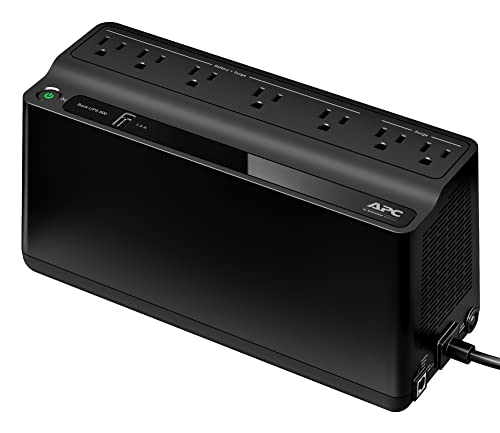
APC BE600M1 600VA UPS
For home office setups where a brief power interruption can mean lost work, the APC BE600M1 keeps your computer, Wi-Fi, and router running for an estimated 23 minutes at a 100W load. Its five battery-backed outlets plus two surge-only outlets offer flexible protection for essential gear, and the built-in 1.5A USB port doubles as a phone charger during outages.
Pros
- 23 minutes of runtime at 100W load for safe shutdown and continued internet access
- Five battery-backed and two surge-only outlets accommodate both critical and less essential devices
- Built-in 1.5A USB port charges a phone during a power outage
- User-replaceable battery (APC replacement battery APCRBC154) extends the unit's lifespan
Cons
- 330W capacity limits connected equipment to lower-power devices like a computer and router
- 490 Joules surge protection is modest compared to higher-rated models
CyberPower CP1500PFCLCD PFC Sinewave UPS
For desktop computers and workstations that require active PFC power source compatibility, this mini-tower UPS offers sine wave battery backup and surge protection. Its line interactive topology with Automatic Voltage Regulation helps correct minor power fluctuations without draining the battery, while the color LCD screen tilts for easy viewing in low positions. Two USB charge ports (Type-A and Type-C) keep portable devices powered even during an outage.
Pros
- Sine wave output ensures compatibility with active PFC power supplies.
- Automatic Voltage Regulation extends battery life by handling minor fluctuations without switching to battery.
- Color LCD with tilt adjustment for quick status checks in tight spaces.
- Includes both Type-A and Type-C USB charging ports for portable devices.
- Comes with a three-year warranty and $500,000 Connected Equipment Guarantee.
Cons
- No mention of hot-swappable batteries or user-replaceable battery details.
- Limited to 1500VA capacity, which may not support larger server racks or multiple high-power devices.
CyberPower ST425 Standby UPS Battery Backup
The CyberPower ST425 is a standby UPS that keeps your home office or entertainment setup running through brief outages, with enough runtime to shut down gracefully during longer ones. Its built-in surge protection and lifetime equipment guarantee add peace of mind for protecting computers, routers, and consoles.
Pros
- Provides battery backup and surge protection for power outages and lightning-induced surges
- Includes a lifetime connected equipment guarantee and three-year warranty
- Sleek design suitable for home office and entertainment use
Cons
- Standby topology may not provide the same level of protection as line-interactive or online UPS models
- Limited runtime for longer outages, primarily intended for graceful shutdown
CyberPower CP1500AVRLCD3 1500VA UPS
With 1500VA/900W capacity, 12 outlets, and a color LCD panel showing power status, this mini tower UPS is a solid choice for safeguarding workstations and networking gear. Automatic voltage regulation corrects minor fluctuations without draining the battery, while the two USB charge ports add convenience for mobile devices.
Pros
- 12 outlets with 6 battery backup and 6 surge-only options
- Automatic Voltage Regulation (AVR) reduces battery usage
- Color LCD panel provides detailed power and battery information
- Includes Type-A and Type-C USB charging ports
- 3-year warranty and 500,000 connected equipment guarantee
Cons
- Simulated sine wave output may not suit all sensitive electronics
- Relatively heavy at 23.8 pounds
APC BE425M 425VA UPS Battery Backup
This compact UPS is geared toward keeping small electronics like Wi-Fi routers and modems online during outages, offering up to 15 minutes of runtime at a 100W load. With six outlets (four battery-backed, two surge-only) and a wall-mountable design, it suits apartments, dorms, and small workspaces where space is tight. The 3-year warranty and $75,000 equipment protection add peace of mind for connected devices.
Pros
- Provides reliable battery backup for low-power devices, maintaining internet connectivity during outages.
- Six outlets with mixed battery backup and surge protection offer flexible connection options.
- Compact, wall-mountable design saves space in small areas.
- Backed by a 3-year warranty and $75,000 equipment protection.
Cons
- Limited runtime for higher-power loads; only 15 minutes at 100W.
- Only 425VA/255W capacity, not suitable for larger electronics or whole systems.
- No USB charging ports or additional connectivity features.
Best Backup Battery For Home Computer Buying Guide for 2026
Battery Capacity and Runtime
The most critical factor when choosing a best backup battery for home computer is battery capacity, measured in VA (volt-amps) or watts. This determines how long your computer can run during an outage. For a typical desktop computer with a monitor, a 600VA unit like the APC BE600M1 offers around 23 minutes at 100W load, enough for a safe shutdown. Higher-capacity models, such as 1500VA units, can power multiple devices for longer periods. Calculate your total wattage by adding up your computer, monitor, router, and other peripherals, then choose a UPS with at least 20% headroom.
Runtime varies significantly based on load. If you only need to save documents and shut down, a lower-capacity unit may suffice. However, if you require extended uptime for critical work, consider a higher-wattage model with sine wave output for compatibility with active PFC power supplies. Always check the manufacturer’s runtime charts for your specific load.
Surge Protection and Outlet Configuration
Beyond battery backup, a best backup battery for home computer must protect your computer from power surges and spikes. Look for models with a high joule rating (e.g., 490 J or more) for robust surge protection. The number and type of outlets matter too—some units offer a mix of battery-backed and surge-only outlets. For example, the APC BE600M1 has 5 battery backup outlets and 2 surge-only, letting you prioritize your computer while protecting less critical devices. Ensure the outlets are well-spaced to accommodate bulky power adapters.
USB charging ports are a bonus, keeping your phone or tablet powered during outages. Some models, like the CyberPower CP1500AVRLCD3, include both USB-A and USB-C ports for modern devices. This feature adds convenience without sacrificing protection.
Form Factor and Placement
UPS units come in various shapes and sizes. Mini-tower models like the CyberPower CP1500PFCLCD fit neatly under desks, while compact units such as the APC BE425M can be wall-mounted to save floor space. Consider the physical dimensions and weight, especially if you have limited room. Wall-mountable designs are ideal for small offices, dorm rooms, or apartments. Ensure the unit is placed in a well-ventilated area to prevent overheating.
Portability is less critical for a home computer setup, but if you move frequently, a lighter unit with a handle can be helpful. Most models in this range weigh between 5 and 25 pounds, so plan your setup accordingly.
Waveform Type: Sine Wave vs. Simulated Sine Wave
The waveform output of a UPS affects compatibility with sensitive electronics. Pure sine wave UPS units, like the CyberPower CP1500PFCLCD, provide clean power that mimics utility electricity, making them ideal for computers with active PFC power supplies, gaming rigs, and audio/video equipment. Simulated sine wave models, such as the CyberPower CP1500AVRLCD3, are cheaper but may cause issues with some devices. For most home computers, simulated sine wave is fine, but if you have high-end hardware, invest in pure sine wave for reliability.
Check your computer’s power supply specifications. If it requires active PFC compatibility, a sine wave UPS is non-negotiable. Otherwise, simulated sine wave will work for basic desktops and networking gear.
Additional Features: LCD Display, AVR, and Software
Modern UPS units offer extra features that enhance usability. An LCD display, as seen on the CyberPower CP1500AVRLCD3, shows real-time data like battery level, load, and input voltage, helping you monitor power conditions. Automatic Voltage Regulation (AVR) corrects minor voltage fluctuations without draining the battery, extending its lifespan. Software like PowerPanel Personal allows you to configure automatic shutdowns, schedule self-tests, and receive alerts.
Warranty and equipment protection policies are also important. These provide peace of mind, knowing your investment is protected. For a broader look at backup solutions, visit our Portable Power Stations page.
Why You Should Trust Us
We take a data-driven approach to reviewing best backup battery for home computer products. Our team analyzes manufacturer specifications, user feedback, and industry standards to provide unbiased recommendations. We do not accept payment for reviews, and our rankings are based solely on performance, features, and value. Each product is evaluated against key criteria like runtime, surge protection, and build quality, ensuring you get accurate, actionable information.
Our methodology includes cross-referencing specs with real-world usage scenarios, such as powering a typical home computer setup. We also consider long-term reliability factors like battery replacement costs and warranty coverage. This transparency helps you make an informed decision without marketing hype.
Final Thoughts
After reviewing 5 models, our top pick for most users is the CyberPower CP1500PFCLCD PFC Sinewave UPS Battery. Its pure sine wave output, 1500VA capacity, and LCD display make it ideal for protecting high-end computers and sensitive electronics. For budget-conscious buyers, the APC BE600M1 UPS Battery Backup & Surge Protector offers excellent value with reliable runtime and surge protection at a lower capacity. If space is tight, the APC BE425M UPS Battery Backup and Surge Protector is a compact, wall-mountable option that’s perfect for small setups.
Ultimately, the best backup battery for home computer for your home computer depends on your specific needs—whether it’s extended runtime, advanced features, or affordability. We recommend comparing the models in our list using the interactive comparison tool above. For more in-depth guides, explore our best home battery backup without solar article.
Frequently Asked Questions
What is the best backup battery for home computer for a home computer in 2026?
The best backup battery for home computer depends on your computer’s power requirements. For most desktop PCs with monitors, a 1500VA UPS like the CyberPower CP1500PFCLCD provides ample runtime and sine wave output for compatibility. For smaller setups, a 600VA unit like the APC BE600M1 offers good value. Check our comparison table for detailed specs.
How long will a UPS battery backup keep my computer running?
Runtime varies by load. A 600VA UPS can power a 100W load for about 23 minutes, while a 1500VA unit may run a 300W system for 10-15 minutes. For extended runtime, consider a higher-capacity model or a portable power station. Use the manufacturer’s runtime charts for precise estimates.
Do I need a pure sine wave UPS for my computer?
If your computer has an active PFC power supply, a pure sine wave UPS is recommended to prevent instability or damage. For standard desktop PCs with non-PFC supplies, simulated sine wave is sufficient. Check your power supply specifications to be sure.
Can I use a UPS for other devices besides my computer?
Yes, most UPS units have multiple outlets for routers, modems, monitors, and other peripherals. Just ensure the total load doesn’t exceed the UPS’s capacity. Surge-only outlets are ideal for less critical devices like printers or speakers.
How often should I replace the battery in my UPS?
UPS batteries typically last 3-5 years, depending on usage and environmental conditions. Many models, like the APC BE600M1, have user-replaceable batteries. Look for low-battery alarms or LCD indicators to know when replacement is needed. For more tips, visit our Home Backup category.
Related reading
Popular buying guides
About the author
The PowerStationWiki editorial team researches portable power stations and solar generators from manufacturer specifications, published reviews and buyer feedback, and writes plain-English buying guides.