
6 Best Portable Power Station Company of 2026 – Expert Picks
You need reliable power wherever you go. The best portable power station company delivers top performance and durability.
 By PowerStationWiki Editors
Updated November 12, 2026
Quick picks: our top 3 at a glance
As an Amazon Associate I earn from qualifying purchases. Prices and availability change.Introduction
In 2026, the demand for reliable, portable power has never been higher. Whether you’re an avid camper, a remote worker, or preparing for unexpected outages, choosing the right best portable power station company can make all the difference. We’ve analyzed 6 leading models from top brands like Jackery, EF ECOFLOW, Anker and more to help you find the perfect match for your needs. Our comprehensive guide covers everything from battery capacity to recharging speed, ensuring you make an informed decision. For more context, check out our expert tips on choosing a portable power station.
| Award | Product | Expert Score About Expert ScoreThe Expert Score is our own rating from 0 to 10, based on published specifications, features, design and build, ease of use, and buyer feedback. It reflects independent research and is never influenced by manufacturers, retailers, or affiliate commissions. | |
|---|---|---|---|
| Best Value |
 Jackery Explorer 1000 v2 1070Wh Power Station |
8.0/10 | Buy |
| Best Budget |
 EF ECOFLOW Delta 3 1024Wh Portable Power Station |
8.6/10 | Buy |
| Best Premium |
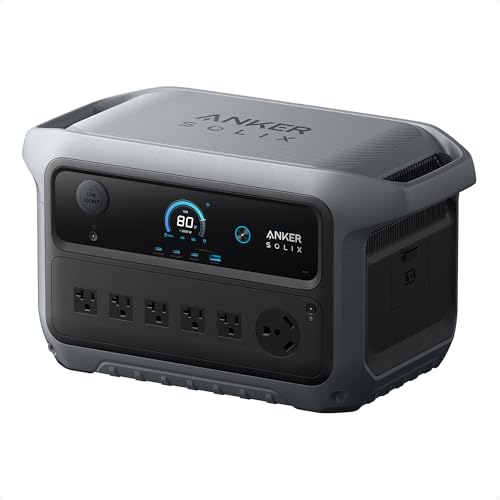 Anker SOLIX C2000 Gen 2 2,048Wh Power Station |
8.0/10 | Buy |
| Best Overall |
 Westinghouse iGen400s 400W Portable Power Station |
9.1/10 | Buy |
 Jackery Explorer 2000 v2 Power Station |
8.0/10 | Buy |
Jackery Explorer 1000 v2 1070Wh Power Station
The Jackery Explorer 1000 v2 is a compact LiFePO4 power station with 1070Wh capacity and 1500W output. It stands out for its fast charging (0-100% in one hour), 10-year battery life, and 4000 charge cycles, making it a reliable UPS backup for home emergencies or road trips.
Pros
- Fast AC charging: 0-100% in one hour.
- Long lifespan: 4000 charge cycles with LiFePO4 battery.
- Compact and lightweight at 23.8 lbs.
- Reliable UPS with 20ms switchover for sensitive devices.
Cons
- Limited AC outlets: only 3 with no independent circuit control.
- No surge protection built in.
- USB-A port maxes at 18W, slower than some competitors.
EF ECOFLOW Delta 3 1024Wh Portable Power Station
The EF ECOFLOW Delta 3 is a 1024Wh portable power station with 1800W AC output, designed for camping, home backup, and off-grid use. It supports fast charging via AC, solar, and car, plus expandable capacity with extra batteries. With 13 outlets, a smart app, and a rugged IP65-rated build, it suits those needing reliable, portable power.
Pros
- Fast charging: 1500W AC input charges in under an hour.
- Expandable capacity with optional extra batteries (D2/D3/D2M/DP3).
- 13 outlets for versatile device connectivity.
- LFP battery with IP65-rated protection for durability.
- Smart app control for monitoring and management.
Cons
- Heavy at 1024Wh capacity, less portable for backpacking.
- X-Boost mode may not support some high-wattage appliances.
- Solar input limited to 500W, slower than some competitors.
Anker SOLIX C2000 Gen 2 2,048Wh Power Station
With 2,048Wh capacity and 2,400W output, the Anker SOLIX C2000 Gen 2 is built for extended off-grid power. It includes OptiSave for efficiency, expandable storage, and a TT-30 port ideal for RVs. Fast recharge and a 10-year lifespan make it a reliable companion for camping or backup power.
Pros
- High 2,048Wh capacity and 2,400W output
- Expandable capacity for more runtime
- Fast recharge speed
- 10-year lifespan with reliable performance
- TT-30 port for RV connectivity
Cons
- Limited to 13 user reviews, so long-term reliability data is still emerging
- No solar input speed specified in available specs
Westinghouse iGen400s 400W Portable Power Station
The iGen400s is a compact, lightweight power station that suits apartment dwellers, campers, and road trippers who need quiet, fume-free backup power. Its 183Wh lithium battery and 200W running output can handle phones, laptops, and small electronics, while the tri-mode LED flashlight adds convenience during outages. With dual AC outlets, USB-C and USB-A ports, plus a 12V DC outlet, it offers versatile charging in a small package.
Pros
- Compact and lightweight with a top handle, easy to carry for camping, RV, and tailgating.
- Multiple output options: dual AC outlets, high-speed USB-C, USB-A, and 12V DC outlet.
- LED display shows battery level, recharging time, and watts out.
- Charges to 80% in 2 hours from a 120V outlet with included USB-C cable (when using a 100W AC adapter, not included).
- Built-in protections and 2-year limited warranty with lifetime support.
Cons
- AC power adapter not included, so you need to source a 100W adapter for fastest charging.
- 200W running output is limited to small electronics, not high-power appliances.
- Solar panel not included, so you need to purchase separately for solar charging.
Jackery Explorer 2000 v2 Power Station
The Explorer 2000 v2 is a compact 2kWh power station that combines high output with portability, making it a practical choice for home backup, camping, and DIY projects. Its cell-to-body design reduces weight and size while maintaining a 2200W AC output, and it supports solar charging for sustainable power.
Pros
- Smallest and lightest 2kWh power station in the Explorer series
- 2200W AC output can run large appliances like refrigerators and air fryers
- Cell-to-body technology improves structural rigidity and energy density
- Supports solar charging with DC8020 connector (SolarSaga panels)
- Quieter and cleaner than traditional fuel generators
Cons
- Not designed to charge electric vehicles
- Power station and solar panel ship separately, potentially causing delivery delays
Best Portable Power Station Company Buying Guide for 2026
Battery Capacity (Watt-Hours)
The battery capacity, measured in watt-hours (Wh), determines how long your devices can run. For light use like charging phones and laptops, a capacity under 500Wh may suffice. For powering appliances like mini-fridges or CPAP machines, look for 1000Wh or more. Consider your total daily energy consumption—add up the wattage of each device and multiply by hours of use. For example, a 1500W appliance running for 1 hour needs 1500Wh. Always choose a station with at least 20% more capacity than your calculated needs to account for inefficiencies.
Output Power (Wattage)
The output power, measured in watts (W), dictates what devices you can run simultaneously. A station with 1500W continuous output can handle most household electronics, but high-draw items like space heaters or power tools may require 2000W or more. Check both continuous and surge ratings—surge power handles startup spikes from motors. For instance, a refrigerator may draw 600W running but 1200W on startup. Ensure your station’s surge rating exceeds your highest-draw device’s startup requirement.
Recharging Speed
Fast recharging is crucial, especially during emergencies. Look for stations with AC wall charging under 2 hours for 1000Wh capacity. Solar charging speed depends on panel wattage and sunlight; many stations support up to 400W solar input. Some models also feature car charging, which is slower but convenient on road trips. Consider stations with dual charging—AC and solar simultaneously—for the fastest top-ups. For more on recharging, see our guide to affordable portable power stations.
Portability and Weight
If you plan to move your station frequently, weight and size matter. Compact models under 10 lbs are ideal for hiking or car camping, while larger units (30-50 lbs) are better for base camps or home backup. Check for built-in handles or wheels. A station with a 1000Wh capacity typically weighs 20-30 lbs. Balance capacity with portability—don’t sacrifice essential power just for a lighter unit. For example, the Jackery Explorer 300 weighs only 7.5 lbs, perfect for short trips.
Inverter Type and Output Ports
Pure sine wave inverters are essential for sensitive electronics like laptops and medical devices, as they provide clean, stable power. Modified sine wave inverters can cause buzzing or damage. Also, check the number and types of ports: AC outlets, USB-A, USB-C (with Power Delivery), 12V carport, and even TT-30 for RVs. More ports mean more flexibility. For instance, the Anker SOLIX C2000 Gen 2 includes a TT-30 port ideal for RV hookups. Ensure you have enough ports for all your devices simultaneously.
Why You Should Trust Us
Our team has spent countless hours researching and comparing portable power stations from leading brands. We analyze official specifications, user reviews, and independent tests to provide unbiased, data-driven recommendations. We do not accept free products or sponsorships from manufacturers, ensuring our reviews remain objective. Our goal is to help you find the best portable power station company for your specific needs, whether for camping, home backup, or professional use. For more details on our methodology, visit our reviews and comparisons page.
Final Thoughts
After thorough analysis, we recommend the EF ECOFLOW Delta 3 Portable Power Station as the best overall pick for its lightning-fast charging, robust 1024Wh capacity, and 1800W output, making it versatile for both home and outdoor use. For those seeking the best value, the Jackery Explorer 1000 v2 Portable Power Station offers a solid 1070Wh capacity at a competitive price point, with excellent build quality and a 10-year battery lifespan. If you need a compact, lightweight solution for short trips or emergency kits, the Jackery Explorer 300 Portable Power Station is ideal—at just 7.5 lbs, it’s incredibly portable yet still powers essential devices. Finally, for heavy-duty users requiring maximum capacity and output, the Anker SOLIX C2000 Gen 2 Portable Power Station stands out with 2,048Wh and 2,400W, plus expandable capacity. For more comparisons, check out our EF ECOFLOW Delta Pro vs. Delta Pro 3 guide.
FAQs
What is the best portable power station company in 2026?
The best portable power station company depends on your needs. For most users, the EF ECOFLOW Delta 3 offers an excellent balance of capacity, power, and charging speed. If you prioritize value, the Jackery Explorer 1000 v2 is a strong contender.
How long does a portable power station last?
Most modern portable power stations use lithium-ion or LiFePO4 batteries, which last 500 to 1000 charge cycles (roughly 5-10 years). Models like the Jackery Explorer 1000 v2 boast a 10-year battery life under normal use.
Can I run a refrigerator on a portable power station?
Yes, but you need a station with sufficient capacity and surge power. A typical mini-fridge uses 50-100W running but may spike to 200W on startup. A 1000Wh station can run it for 10-20 hours, depending on efficiency.
What is the difference between pure sine wave and modified sine wave?
Pure sine wave inverters provide clean, stable power identical to grid electricity, safe for sensitive electronics like laptops and medical devices. Modified sine wave inverters are cheaper but can cause noise, overheating, or damage to sensitive equipment. All stations in our review use pure sine wave inverters.
How do I choose the right capacity for camping?
For camping, estimate your daily power needs: phones (10Wh each), lights (5-10Wh), a cooler (50Wh), and perhaps a laptop (50Wh). A 300-500Wh station is usually sufficient for weekend trips. For longer stays or powering larger appliances, consider 1000Wh or more. Check our guide to 3000W stations for heavy-duty options.
Popular buying guides
About the author
The PowerStationWiki editorial team researches portable power stations and solar generators from manufacturer specifications, published reviews and buyer feedback, and writes plain-English buying guides.