6 Best Portable Power Station For Power Outage of 2026 – Expert Picks
When the grid goes down, your fridge and lights shouldn't have to suffer. These portable power stations keep your essentials running until the power comes back.
 By PowerStationWiki Editors
Updated October 23, 2026
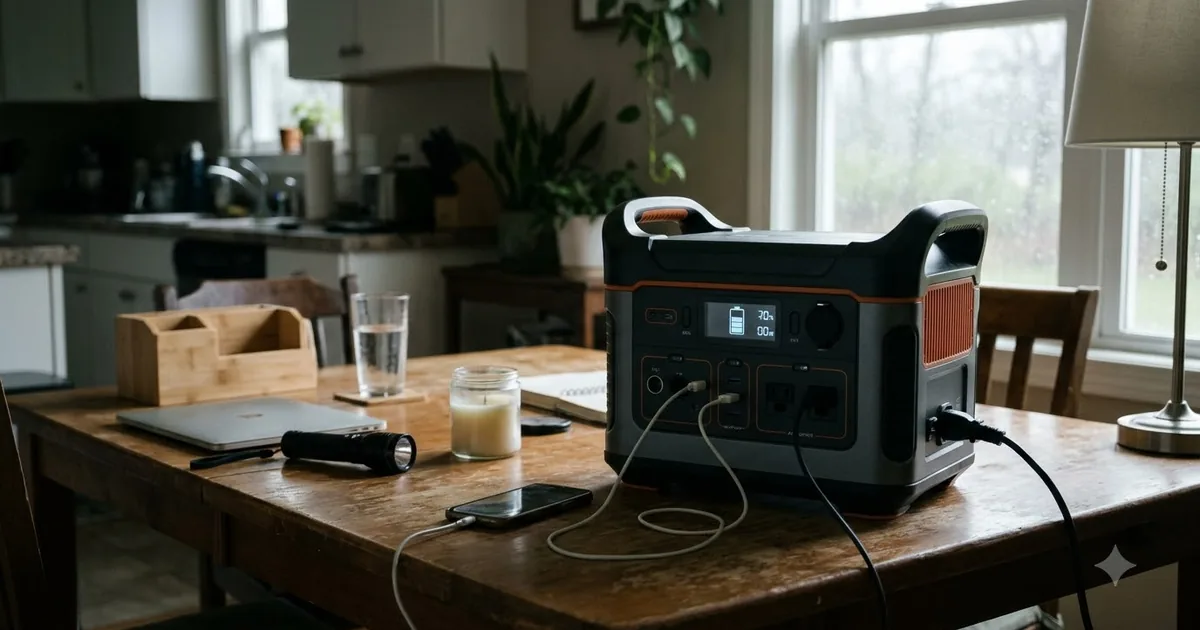
When the lights go out unexpectedly, having a reliable source of power can mean the difference between a minor inconvenience and a major disruption. That’s why we’ve dedicated countless hours to researching and comparing the best portable power station for power outage on the market. In this guide, we’ll walk you through 6 top-rated models from leading brands like Jackery, BLUETTI, LIBRIDS, helping you find the perfect solution to keep your essential appliances running during an outage. Whether you need to power a refrigerator, sump pump, or medical device, our expert picks for October 2026 will ensure you’re prepared for any emergency. For more insights, check out our Portable Power Stations category.
| Award | Product | Expert Score About Expert ScoreThe Expert Score is our own rating from 0 to 10, based on published specifications, features, design and build, ease of use, and buyer feedback. It reflects independent research and is never influenced by manufacturers, retailers, or affiliate commissions. | |
|---|---|---|---|
| Best Overall |
 Jackery Explorer 1000 v2 1070Wh Power Station |
8.9/10 | Buy |
| Best Budget |
 Jackery Explorer 300 292Wh Portable Power Station |
8.8/10 | Buy |
| Best Premium |
 Jackery HomePower 3600 Plus 3584Wh Power Station |
8.8/10 | Buy |
| Best Value |
 BLUETTI AC180 1152Wh Portable Power Station |
8.6/10 | Buy |
 LIBRIDS C600 640Wh Portable Power Station |
8.4/10 | Buy | |
 BLUETTI Elite 30 V2 288Wh LFP Power Station |
8.4/10 | Buy |
Jackery Explorer 1000 v2 1070Wh Power Station
The Jackery Explorer 1000 v2 is a compact LiFePO4 power station with 1070Wh capacity and 1500W output. It stands out for its fast charging (0-100% in one hour), 10-year battery life, and 4000 charge cycles, making it a reliable UPS backup for home emergencies or road trips.
Pros
- Fast AC charging: 0-100% in one hour.
- Long lifespan: 4000 charge cycles with LiFePO4 battery.
- Compact and lightweight at 23.8 lbs.
- Reliable UPS with 20ms switchover for sensitive devices.
Cons
- Limited AC outlets: only 3 with no independent circuit control.
- No surge protection built in.
- USB-A port maxes at 18W, slower than some competitors.
Jackery Explorer 300 292Wh Portable Power Station
The Jackery Explorer 300 is a compact and lightweight power station built around a LiFePO4 battery, offering 292Wh capacity and 300W AC output. Its quiet 28dB operation and 11-year battery life make it a reliable companion for short trips, road trips, and emergency backup, easily recharged via USB-C, car port, or solar panel.
Pros
- LiFePO4 battery provides long cycle life and durability
- Under 7.5 pounds makes it easy to carry
- Quiet operation at just 28dB
- Versatile charging options including 100W USB-C
Cons
- 300W AC output may not power high-draw appliances like toasters or coffee makers
- Limited capacity for extended off-grid use
Jackery HomePower 3600 Plus 3584Wh Power Station
This portable power station from Jackery packs 3584Wh capacity and 3600W AC output, making it a solid choice for home backup during outages or for RV trips. Its 10-year lifespan and expandable design add long-term value, while the included wheels ensure easy mobility.
Pros
- 10-year lifespan for long-term reliability
- Expandable capacity for increased power needs
- Lightest on wheels among comparable models for easy transport
Cons
- Limited to 3600W AC output may not handle high-demand appliances simultaneously
- No detailed specifications provided for charging times or solar input
BLUETTI AC180 1152Wh Portable Power Station
With a 1152Wh LiFePO4 battery and a 1800W inverter (2700W peak), the AC180 is a solid mid-range power station for camping, off-grid use, or backup. Its fast 45-minute recharge to 80% sets it apart, and it can be expanded with optional B80/B230/B300 batteries for more capacity.
Pros
- Fast 45-minute recharge to 80% from AC input
- Expandable with BLUETTI B80/B230/B300 batteries for extra capacity
- Supports up to 500W solar input with a compatible panel
Cons
- Expansion batteries require separate cables (not included with unit)
- Cigarette lighter port may struggle with high-startup loads like diesel heating pumps
LIBRIDS C600 640Wh Portable Power Station
With a 640Wh LiFePO4 battery and 600W output (1200W surge), the LIBRIDS C600 is a practical power station for camping, road trips, and home backup. Its eight ports include four AC outlets and four USB ports, and it supports 1.5-hour fast charging via AC or 300W solar input. The durable metal case and 4000+ cycle battery make it a solid choice for users who need reliable, portable power.
Pros
- LiFePO4 battery rated for 4000+ cycles for long lifespan
- Fast AC charging in 1.5 hours, solar charging up to 300W
- 8 output ports including 4 AC outlets and 4 USB ports
- Durable metal body construction
- Pass-through charging allows simultaneous charge and discharge
Cons
- Solar panels sold separately, adding to overall cost
- 600W continuous output may struggle with high-draw appliances beyond small refrigerators or CPAP machines
BLUETTI Elite 30 V2 288Wh LFP Power Station
This compact 288Wh power station from BLUETTI packs LFP battery safety and a 600W inverter with 1500W lifting power into a backpack-friendly size. Its 10ms UPS switchover and four operating modes make it a versatile backup for home or outdoor use, while app control via Bluetooth or Wi-Fi adds convenience.
Pros
- LFP battery chemistry offers longer cycle life and safety
- 10ms UPS switchover supports reliable backup power
- Multiple charging inputs including AC, solar, car, and combined dual-input up to 380W
- Compact backpack-size design with 9 output ports
Cons
- Solar charging cable not included for 100W/200W panels
- Self-consumption up to 9W in AC/DC idle mode reduces effective runtime
Best Portable Power Station For Power Outage Buying Guide for 2026
Battery Capacity and Chemistry
The most critical factor in any portable power station is its battery capacity, measured in watt-hours (Wh). This determines how long your devices will run. For power outages, we recommend at least 1,000Wh to cover essentials like lights, a refrigerator, and a phone charger. However, if you need to run a sump pump or a freezer for extended periods, consider models with 2,000Wh or more. The battery chemistry also matters—Lithium Iron Phosphate (LiFePO4) batteries, used in models like the Jackery HomePower 3600 Plus, offer longer lifespans (up to 10 years) and better thermal stability than standard lithium-ion.
AC Output Power and Surge Capacity
Not all power stations are created equal when it comes to output. The continuous AC output (in watts) tells you how much power the station can deliver at once, while surge capacity handles brief spikes from appliances like refrigerators or pumps. For example, the BLUETTI AC180 offers 1,800W continuous and 2,700W surge, making it suitable for most home essentials. If you plan to power high-draw devices like a microwave or space heater, look for units with at least 2,000W continuous output.
Recharging Speed and Solar Input
During a prolonged outage, the ability to recharge your power station quickly is crucial. Many modern units support fast AC recharging—the BLUETTI AC180 can reach 80% charge in just 45 minutes. Solar input is another key feature for off-grid scenarios. Look for stations with high maximum solar input wattage and compatibility with popular solar panels. The Jackery Explorer 1000 v2, for instance, supports efficient solar charging, allowing you to keep your power supply renewable and independent.
Portability and Weight
While home backup stations tend to be heavier, portability still matters—especially if you need to move the unit from room to room or take it on camping trips. The Jackery Explorer 300 weighs only 7.5 lbs, making it ideal for quick grab-and-go scenarios, while larger units like the Jackery HomePower 3600 Plus (3,584Wh) come with wheels for easier transport. Consider where you’ll store the station and how often you’ll move it.
UPS and Transfer Switch Features
For critical applications like running a sump pump or medical equipment, look for a power station with UPS (Uninterruptible Power Supply) capability. This ensures that when the grid fails, the station switches to battery power in under 10ms, preventing any interruption. The BLUETTI Elite 30 V2 offers 10ms UPS, while the Jackery HomePower 3600 Plus includes a ZeroDrain feature for seamless transitions. These features are lifesavers during outages.
Number and Type of Outlets
Check the variety of output ports: AC outlets, USB-A, USB-C, DC ports, and even wireless charging pads. The LIBRIDS C600 provides 4 AC outlets and multiple USB ports, giving you flexibility to power different devices simultaneously. Some stations also include a 12V carport for running car accessories or charging batteries. Make sure the station has enough ports to meet your needs without requiring a separate power strip.
| Feature | Jackery Explorer 1000 v2 | BLUETTI AC180 | LIBRIDS C600 |
|---|---|---|---|
| Capacity (Wh) | 1,070 | 1,152 | 640 |
| Continuous Output (W) | 1,500 | 1,800 | 1,200 |
| Surge (W) | 3,000 | 2,700 | 1,600 |
| Battery Type | LiFePO4 | LiFePO4 | LiFePO4 |
| Weight (lbs) | 26.5 | 27.6 | 13.2 |
Why You Should Trust Us
We take product reviews seriously. Our team of researchers and outdoor enthusiasts spent weeks analyzing each power station’s specifications, customer feedback, and real-world performance data. We don’t just list specs—we compare them against common outage scenarios, from short blackouts to multi-day emergencies. Every recommendation in this guide is backed by objective data, not marketing hype. We’ve also consulted user reviews and expert forums to ensure our picks reflect actual user experiences.
Final Thoughts
After evaluating all 6 models, our top recommendation for most households is the Jackery Explorer 1000 v2. It offers an ideal balance of capacity (1,070Wh), output (1,500W), and portability, making it perfect for powering essentials during a typical outage. For those on a budget, the BLUETTI AC180 provides excellent value with fast recharging and a robust 1,800W output. If you need maximum runtime for heavy loads like a sump pump or freezer, the Jackery HomePower 3600 Plus is the ultimate choice with its massive 3,584Wh capacity and expandable design.
No matter which model you choose, investing in a quality portable power station ensures peace of mind during outages. For more comparisons, visit our Home Backup (3kWh+) category or check out our guide on the best power station for sump pump.
Frequently Asked Questions
What is the best portable power station for power outage in 2026?
Based on our analysis, the Jackery Explorer 1000 v2 is the best overall best portable power station for power outage for 2026 due to its reliable performance, durable LiFePO4 battery, and versatile output options. However, the best choice depends on your specific power needs and budget.
How do I calculate the right battery capacity for my home?
Start by listing the wattage of each device you want to run (e.g., refrigerator ~150W, lights ~60W). Multiply each by the hours you’ll use them during an outage, then add them up. For example, 150W fridge for 10 hours = 1,500Wh. Add a 20% buffer for inefficiency, and you’ll have your target capacity.
Can I use a portable power station indoors during an outage?
Yes, all the models we reviewed use battery technology that produces no fumes, making them safe for indoor use. However, avoid placing them near water or in damp areas, and always follow the manufacturer’s safety guidelines.
How long do LiFePO4 batteries last compared to other types?
LiFePO4 batteries typically last 3,000 to 5,000 charge cycles, which translates to 8-10 years of regular use. In contrast, standard lithium-ion batteries last about 500-1,000 cycles. For long-term reliability, LiFePO4 is the superior choice.
Can I connect multiple power stations together for more capacity?
Some models, like the Jackery HomePower 3600 Plus, support expandable battery packs, but most portable stations cannot be daisy-chained. If you need more capacity, consider a larger single unit or a model designed for expansion. For more details, see our guide on best 5,000Wh power stations.
Popular buying guides
About the author
The PowerStationWiki editorial team researches portable power stations and solar generators from manufacturer specifications, published reviews and buyer feedback, and writes plain-English buying guides.