
Can You Use a Portable Power Station Indoors? Ventilation and Placement
Can you use a portable power station indoors? Yes in most cases, with ventilation and placement rules, unlike gas generators. Know the safety basics.
 By Solar & Safety Desk
Updated November 14, 2026
This guide is based on manufacturer specifications, published information and buyer feedback. We do not claim hands-on testing. Always follow the instructions that come with your own equipment.
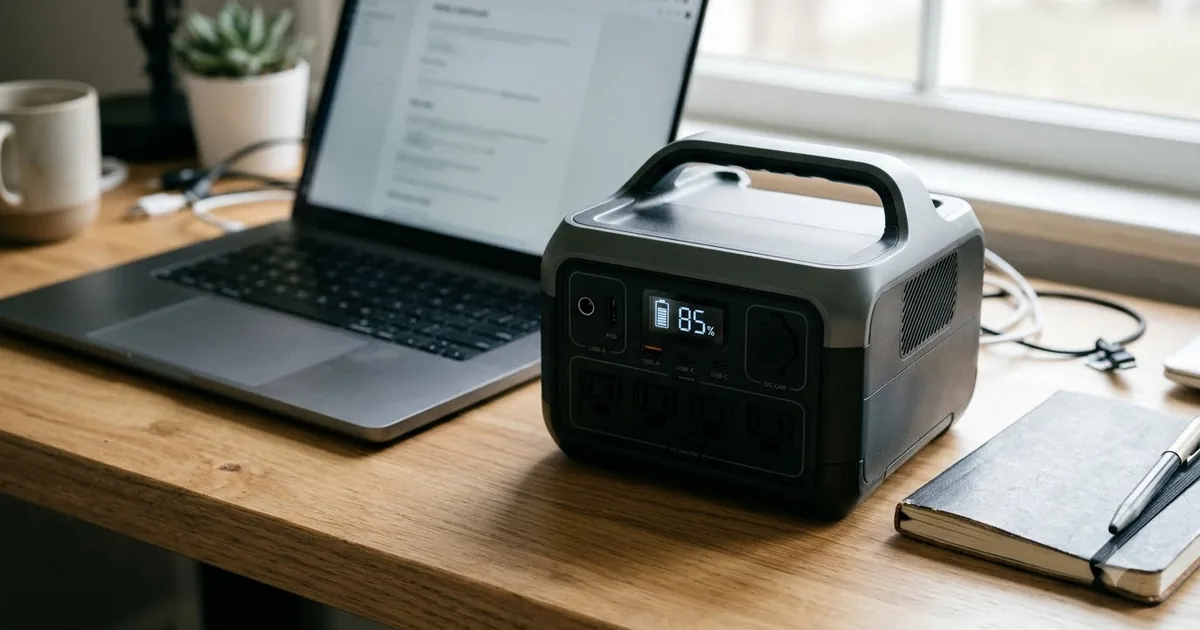
Most portable power stations are designed for use indoors, because they have no combustion and no exhaust fumes. That is a major advantage over gas generators. They still need sensible placement.
Where to place it
- On a flat, stable, dry surface.
- With the vents clear on all sides and fan intakes unblocked.
- Away from heat sources, direct sunlight and flammable materials.
- Away from water, sinks and damp areas.
While charging
Charging produces some heat. Do not cover the unit and do not charge it in a closed cabinet or bag.
Medical devices
If you use medical equipment, follow its maker’s guidance and speak with your healthcare provider.
Related
See are portable power stations safe and power station vs generator.
Ventilation and clearance
Power stations are quiet and produce no exhaust, but the internal fan still needs airflow to move heat away from the battery and electronics. Leave clear space around all vent openings, and do not stack items on top of the unit. Keep it away from curtains, bedding, cardboard and other materials that could block the vents or catch fire. Ventilation matters most during long charging sessions and heavy loads.
Choosing a spot inside the home
- A hard, level floor or table is better than carpet, which can trap heat under the case.
- Keep the unit out of direct sunlight and away from radiators, heaters and stoves.
- Avoid damp rooms and places where water can splash, such as near sinks or bathtubs.
- Place it where cords do not cross walkways, so no one trips.
Charging indoors overnight
Charging is when the unit produces the most heat. Do not place it on a bed, sofa or cushion while it charges. Keep it on a hard surface where you can check it, and use the charger and cable supplied by the maker. If the manual recommends unplugging once the battery is full, follow that advice.
Cords, outlets and extension leads
Use cords in good condition and rated for the load. Avoid running cords under rugs or through doorways where they can be crushed. Do not overload a single wall outlet or power strip. If an outlet feels hot, or a plug looks discoloured, stop using it and have it checked by a qualified electrician.
Fuel-burning devices are a different matter
The main indoor hazard in an outage is usually not the battery but fuel-burning equipment. Gas generators, camping stoves, grills and some heaters produce carbon monoxide, which has no smell and can build up quickly in enclosed spaces. Never run a gas generator indoors or in an attached garage, and keep fuel-burning devices outside. A power station does not burn fuel, but it still needs its own good airflow.
Storms and power outages at home
During a storm, keep the unit away from windows, doors and standing water. Follow guidance from your local emergency authority on sheltering and staying informed. Do not connect a power station to your home wiring to supply the house, because this can endanger electricians and neighbours. If you are unsure about your home’s electrical system, ask a licensed electrician.
Frequently asked questions
Do power stations produce carbon monoxide?
No, they do not burn fuel. Gas generators do, which is why they must run outdoors.
Can I use one in a tent or RV?
Many are used this way. Keep ventilation and follow the manual.
Can a power station be used in a bedroom overnight?
Many people use one this way. Choose a spot with airflow, away from bedding and curtains, and follow the manual. Check the unit regularly if it is charging or running a load overnight.
Does a power station need ventilation like a generator?
It does not burn fuel, so it does not produce carbon monoxide. It still needs clear vents and room for the internal fan to work well.
Is it fine to use on carpet?
A hard, level surface is better. Carpet can block airflow under the case, so raise the unit on a board or table if you must use it on a rug.
Is a small room with the door closed a good place to run one?
A small closed room limits airflow, so the fan and the battery run warmer. If it is safe to do so, open a window, move the unit to a more open area, or pick a spot where the vents are not restricted. Check the temperature around the unit if it will run for many hours.
Can I place it next to a pet bed or a bin of soft material?
Keep it at least a little away from soft materials, pet bedding and loose paper. Anything that can block the vents or hold heat around the case should stay clear of the unit.
Medical equipment: if you plan to run a CPAP machine or other medical equipment from a portable power station, check the device manufacturer’s guidance first and keep a backup plan. A power station is not a medical-grade or guaranteed uninterruptible power source, and this guide is not medical advice.
More guides you may like
Popular buying guides
About the author
The Solar & Safety Desk covers solar panels, charging, lithium battery safety and recalls, citing manufacturer instructions and official sources such as the CPSC.