
Power Station Vs Generator: 7 Top Picks
Find the best Power Station Vs Generator with our comprehensive buying guide.
 By Camping & Mobile Power Desk
Updated November 13, 2026
Quick picks: our top 3 at a glance
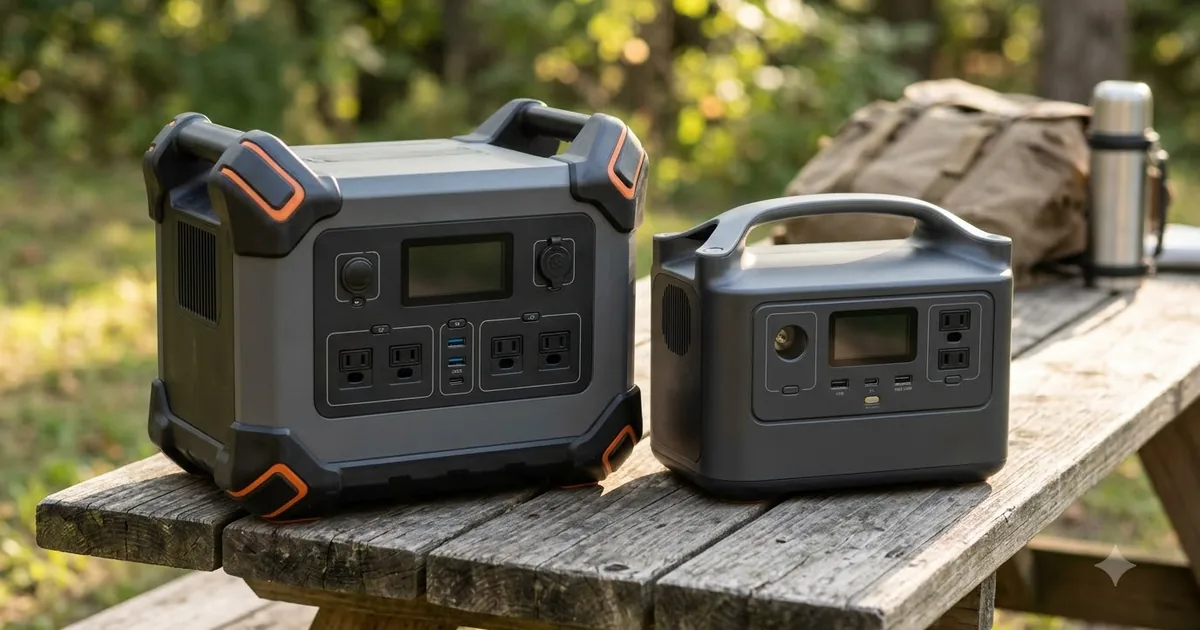
As an Amazon Associate I earn from qualifying purchases. Prices and availability change.When preparing for unexpected grid failures or planning an off-grid camping trip, consumers inevitably face the power station vs generator debate. Traditional gas generators have long been the standard for emergency backup, providing high wattage output as long as you have fuel. However, modern battery-powered stations have revolutionized portable energy. They operate completely silently, emit no dangerous carbon monoxide, and can be used safely indoors. Furthermore, these battery units can pair with solar panels to provide a sustainable, renewable charge indefinitely, eliminating the need to store volatile gasoline around your home.
To help you navigate this transition, we researched the market and evaluated seven portable units based on listing data. Whether you need a massive home backup solution to keep appliances running or a lightweight pack to charge your phone in the woods, our guide highlights the features, strengths, and limitations of each model. Below, you will find our selections to guide your decision in the power station vs generator decision process.
| Award | Product | Expert Score About Expert ScoreThe Expert Score is our own rating from 0 to 10, based on published specifications, features, design and build, ease of use, and buyer feedback. It reflects independent research and is never influenced by manufacturers, retailers, or affiliate commissions. | |
|---|---|---|---|
 Jackery HomePower 1000 v2 1,024Wh LiFePO4 Station |
9.2/10 | Buy | |
| Best Overall |
 Anker SOLIX C1000 Gen 2 Power Station |
9.2/10 | Buy |
 BLUETTI Elite 30 V2 288Wh LFP Power Station |
8.1/10 | Buy | |
| Best Premium |
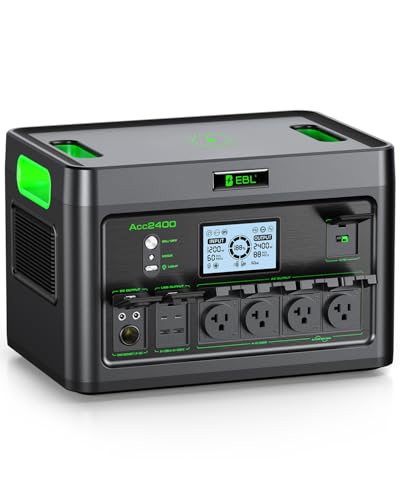 EBL 2400W Portable Power Station LiFePO4 |
8.3/10 | Buy |
 POWKEY 200W 192Wh LiFePO4 Power Station |
8.0/10 | Buy | |
| Best Value |
 MARBERO M823 300W Portable Power Station |
8.3/10 | Buy |
| Best Budget |
 Westinghouse iGen400s 400W Portable Power Station |
9.1/10 | Buy |
Jackery HomePower 1000 v2 1,024Wh LiFePO4 Station
If you need a portable power station that does double duty as a true UPS for your home office or gaming rig, the HomePower 1000 v2 stands out with its 10ms switchover, 3kV surge protection, and a LiFePO4 battery rated for over 6,000 cycles. It also includes a 200W solar panel, making it a solid choice for emergency backup and off-grid use without the usual marketing fluff.
Pros
- True UPS with 10ms transfer time protects sensitive electronics from power flickers.
- 3kV surge and lightning shield adds a layer of protection missing from most portable stations.
- Automotive-grade LiFePO4 battery lasts over 6,000 cycles (70% capacity) for a 16+ year lifespan.
- Fast recharge from 0 to 100% in 50 minutes via emergency mode, with a default 1.25-hour mode for battery health.
- Lightweight at 25 lbs with foldable handle, plus app control for silent night charging and energy management.
Cons
- Only three AC outlets may limit simultaneous high-wattage devices.
- No mention of a carrying case or wheeled cart for easier transport over rough terrain.
- Solar panel included is a 200W model, which may be slower for full recharge compared to larger panels.
Anker SOLIX C1000 Gen 2 Power Station
This compact power station delivers 2000W of output and a 49-minute recharge, making it a solid choice for tailgating, overlanding, or emergency backup. Its 10 ports and app control add convenience, though the lack of expansion capability may limit those needing more capacity.
Pros
- Fast recharge in 49 minutes with UltraFast Charging
- High 2000W output for many devices
- 10 ports for versatile connectivity
- 10-year lifespan for long-term use
- Quiet operation and app control
Cons
- No expansion capability, unlike the earlier C1000 model
- UltraFast Charging only works above 20°C battery temperature
- Not suitable for inductive loads or compressor-based devices
BLUETTI Elite 30 V2 288Wh LFP Power Station
This compact 288Wh power station from BLUETTI packs LFP battery safety and a 600W inverter with 1500W lifting power into a backpack-friendly size. Its 10ms UPS switchover and four operating modes make it a versatile backup for home or outdoor use, while app control via Bluetooth or Wi-Fi adds convenience.
Pros
- LFP battery chemistry offers longer cycle life and safety
- 10ms UPS switchover supports reliable backup power
- Multiple charging inputs including AC, solar, car, and combined dual-input up to 380W
- Compact backpack-size design with 9 output ports
Cons
- Solar charging cable not included for 100W/200W panels
- Self-consumption up to 9W in AC/DC idle mode reduces effective runtime
EBL 2400W Portable Power Station LiFePO4
This EBL unit is a high-wattage portable power station with a LiFePO4 battery, designed for home backup, kitchen use, and outdoor activities. It features multiple recharging options including AC, solar, and carport, plus a 100W USB-C port and wireless charging. Based on verified buyer feedback, it suits users needing reliable off-grid power for medium to heavy loads.
Pros
- Supports multiple recharging methods (AC, solar, carport) for flexible power sourcing
- Includes 100W USB-C and wireless charging for modern devices
- LiFePO4 battery chemistry for longer cycle life and safety
Cons
- Some users may experience initial low-battery lock-up requiring a full charge before first use
- High power output may require SOC above 85% and moderate ambient temperature for full performance
- Battery runtime can shorten with repeated full depletion or high-temperature operation
POWKEY 200W 192Wh LiFePO4 Power Station
This compact power station from POWKEY offers a 192Wh capacity and 200W output, making it suitable for charging small devices like laptops, phones, and CPAP machines during camping trips. Its LiFePO4 battery and built-in BMS provide added safety and stability compared to standard lithium-ion units.
Pros
- Uses stable LiFePO4 battery chemistry with built-in BMS for overload, overheat, and short circuit protection.
- Six output ports allow simultaneous charging of multiple devices.
- Offers three charging options: wall outlet (4-5 hours), solar panel (5-6 hours), and car charging (7-8 hours).
Cons
- 192Wh capacity is relatively low for powering larger appliances or extended use.
- Solar panel not included, adding to initial cost if off-grid charging is desired.
- Charging time via car is longer compared to wall outlet charging.
MARBERO M823 300W Portable Power Station
The MARBERO M823 is a compact 237Wh power station that can run small appliances and charge devices during camping trips or power outages. It features a 300W pure sine wave inverter and multiple ports, including USB-C PD and quick-charge USB-A, making it a versatile backup power source. Best suited for campers or as an emergency home backup, it supports simultaneous wall and solar charging, though solar panels are sold separately.
Pros
- Pure sine wave AC output provides clean power for sensitive electronics
- Multiple output options including USB-C PD, USB-A QC3.0, and AC outlets
- Supports pass-through charging and simultaneous wall/solar input
- Compact and lightweight design at 4.6 lbs
Cons
- Limited 237Wh capacity may not be enough for larger appliances
- Solar panel not included, requiring additional purchase
- Full charge time of about 6 hours via AC adapter
Westinghouse iGen400s 400W Portable Power Station
The iGen400s is a compact, lightweight power station that suits apartment dwellers, campers, and road trippers who need quiet, fume-free backup power. Its 183Wh lithium battery and 200W running output can handle phones, laptops, and small electronics, while the tri-mode LED flashlight adds convenience during outages. With dual AC outlets, USB-C and USB-A ports, plus a 12V DC outlet, it offers versatile charging in a small package.
Pros
- Compact and lightweight with a top handle, easy to carry for camping, RV, and tailgating.
- Multiple output options: dual AC outlets, high-speed USB-C, USB-A, and 12V DC outlet.
- LED display shows battery level, recharging time, and watts out.
- Charges to 80% in 2 hours from a 120V outlet with included USB-C cable (when using a 100W AC adapter, not included).
- Built-in protections and 2-year limited warranty with lifetime support.
Cons
- AC power adapter not included, so you need to source a 100W adapter for fastest charging.
- 200W running output is limited to small electronics, not high-power appliances.
- Solar panel not included, so you need to purchase separately for solar charging.
Our Top Picks
Jackery Explorer 1000 v2
Based on listing data, the Jackery Explorer 1000 v2 is highly rated at 4.9 out of 5 stars and features an automotive-grade LiFePO4 battery. This chemistry allows for over 6,000 charge cycles, providing a projected lifespan of over 16 years. It perfectly suits homeowners needing reliable backup for sensitive electronics. A major strength is its 10-millisecond UPS capability, which automatically takes over during an outage to keep desktop PCs running smoothly. Furthermore, it boasts robust safety with a 3,000V surge resistance and lightning shield. Its compact 12.4 by 7.9 by 9.2-inch dimensions make storage highly convenient.
Jackery HomePower 1000 v2 1,024Wh LiFePO4 StationAnker SOLIX C1000 Gen 2
We researched the Anker SOLIX C1000 Gen 2 and found it to be a highly regarded option, carrying a strong 4.7 customer rating. Packaged with a 200W solar panel, this unit is incredibly well-suited for off-grid enthusiasts, campers, and RV owners who want to continuously harness solar energy. The inclusion of the solar panel is its primary strength, offering immediate out-of-the-box renewable charging potential. While the provided listing data does not detail its exact internal wattage output or capacity, Anker’s established reputation in the charging space makes this a dependable alternative to traditional gas generators.
Anker SOLIX C1000 Gen 2 Power StationBLUETTI Elite 30 V2 600W
The BLUETTI Elite 30 V2 features a 288Wh capacity alongside a 600W output and utilizes an LFP solar generator battery. Securing a 4.4 rating based on listing data, it is a highly practical choice for individuals needing moderate, reliable power for weekend camping trips or brief residential outages. The LFP chemistry provides excellent longevity and stable performance. Its balanced wattage-to-capacity ratio is a great strength for charging small electronics. However, its primary limitation is the modest 288Wh overall capacity, meaning it is not designed to run large household appliances for extended periods of time.
BLUETTI Elite 30 V2 288Wh LFP Power StationEBL 2400W Power Station
For consumers requiring substantial appliance output, the EBL 2400W Portable Power Station is an excellent choice. We researched this model and found it holds a solid 4.4 customer rating. Explicitly designed for heavy home use, it utilizes a highly durable LiFePO4 battery chemistry for long-term safety. The main limitation is that the listing data does not specify the total watt-hour capacity, requiring users to carefully estimate total runtimes.
EBL 2400W Portable Power Station LiFePO4POWKEY 200W 192Wh
The POWKEY 200W Portable Power Station features a 192Wh capacity and utilizes a safe LiFePO4 battery. With a 4.2 rating, this solar generator is clearly targeted at lightweight camping and outdoor recreational activities rather than demanding home backup scenarios. Based on the listing data, it is best suited for keeping phones, tablets, and small camping lights charged while off the grid. Its primary strength lies in its extremely compact nature and stable battery chemistry. Conversely, its main limitation is the low 200-watt maximum output, which will absolutely not support larger electronics or heating devices.
POWKEY 200W 192Wh LiFePO4 Power StationMARBERO 300W 237Wh
We researched the MARBERO 300W, which provides a 237Wh lithium battery capacity and includes a pure sine wave inverter. Holding a 4.2 rating, it is specifically tailored for outdoor camping and minor emergency backup situations. The pure sine wave feature is a notable strength from the data, ensuring safe, clean power delivery for sensitive electronics like laptops. While the 300W output is a helpful upgrade over the smallest entry-level units, it remains a limitation for those expecting to run heavy gear. It serves perfectly as a reliable, compact solar generator companion for basic electronics.
MARBERO M823 300W Portable Power StationWestinghouse iGen400s 400W
Rounding out our list is the Westinghouse iGen400s, which provides a 400-watt output and a 183Wh total capacity. Rated at 4.2 stars based on listing data, this portable power station features a convenient LED display and DC outlets. It suits users who prefer a recognizable, traditional power equipment brand for light-duty off-grid tasks. The 400W output is a strength that allows for slightly higher-draw devices compared to smaller peers. However, the 183Wh battery capacity is a significant limitation; running devices near the maximum wattage will deplete the internal battery extremely quickly during off-grid emergencies.
Westinghouse iGen400s 400W Portable Power StationHow to Choose
- Evaluate Your Power Capacity Needs: The most critical factor when choosing between battery systems is the overall capacity, measured in watt-hours. This dictates how long your devices will run before requiring a recharge. A 200Wh capacity is excellent for charging smartphones and tablets over a weekend camping trip. However, keeping a standard household refrigerator or essential medical device running through an extended residential grid failure requires a significantly higher capacity unit to ensure continuous overnight operation.
- Check the Maximum Operating Output: While capacity dictates duration, wattage output dictates what you can plug in. Based on listing data, smaller units output between 200W and 300W, suitable for laptops and LED lighting. Conversely, high-demand appliances like microwaves and space heaters require over 1,500 continuous watts. Always inventory the specific wattage requirements of your essential appliances, ensuring the power station features an AC inverter capable of handling that combined peak load without tripping.
- Consider the Internal Battery Chemistry: Modern portable units rely on lithium-based batteries, but the specific chemistry matters for longevity. Lithium Iron Phosphate has become the industry standard. As seen in several units we researched, these batteries endure thousands of charge cycles, often lasting over a decade before capacity degrades significantly. This chemistry is also exceptionally stable and less prone to thermal issues. Prioritizing this chemistry is recommended for a long-term home backup investment.
- Assess Recharge Options and Solar Capability: A massive advantage of a battery-based system over a traditional gas setup is the ability to recharge using renewable energy. Most units charge via a standard AC wall outlet or a car port. However, solar charging capability is vital for prolonged off-grid excursions or extended natural disasters where the local grid remains offline. Ensure your chosen model is compatible with portable solar panels to keep essential gear functioning indefinitely.
- Look for Uninterruptible Power Supply Features: If you work from home or rely on continuous power for desktop computers, a UPS function is vital. A power station with UPS capabilities remains plugged into your wall outlet while devices plug into the station. When the grid goes down, internal circuitry switches to battery power in mere milliseconds. This rapid transition is generally fast enough to prevent desktop PCs from shutting down, preventing sudden data loss.
FAQ
Power station vs generator: which is better for home backup?
The choice depends entirely on your specific backup needs and living situation. Battery stations run completely silently, require virtually zero mechanical maintenance, and emit absolutely no exhaust, making them safe for indoor use. They are ideal for powering electronics and modern appliances. Conversely, traditional gas generators provide much higher continuous wattage outputs at a lower initial cost, making them better suited for running entire houses or heavy-duty power tools, provided you can safely run them outdoors.
What does pure sine wave mean in these battery units?
When reviewing portable backup options, you will frequently see pure sine wave mentioned alongside inverter specifications. An inverter converts the stored DC power into the AC power used by household appliances. A pure sine wave inverter produces a smooth, consistent electrical wave that mimics the electricity supplied by your municipal grid. This clean power is absolutely essential for safely operating sensitive modern electronics, such as laptop computers and digital equipment, without causing interference or permanent damage.
How long do LiFePO4 batteries actually last?
Lithium Iron Phosphate is a highly durable battery chemistry that significantly outperforms older lithium-ion counterparts in terms of lifespan. Based on listing data, a high-quality battery of this type is typically rated to endure upwards of 3,000 to 6,000 complete charge and discharge cycles before its maximum capacity degrades significantly. For the average consumer using the unit for occasional camping trips or intermittent seasonal power outages, this remarkable cycle life translates to well over a decade of usability.
Can I run a standard kitchen refrigerator on a portable power station?
Yes, you can run a standard kitchen refrigerator, but you must carefully check the maximum continuous wattage output and the total watt-hour capacity. A typical full-sized household refrigerator requires a continuous draw of 300 to 800 watts, with a significantly higher initial surge requirement when the compressor starts. You will need a substantial unit featuring at least a 1,500W output and a capacity exceeding 1,000Wh to safely start the compressor and maintain operation during an outage.
What is the benefit of a built-in UPS feature?
An Uninterruptible Power Supply feature is a critical safeguard for users requiring continuous electricity. When a station with UPS functionality is plugged into a wall outlet, it continuously passes municipal grid power to your connected devices. In the exact moment a blackout occurs, the unit automatically switches to battery power within mere milliseconds. This near-instantaneous transition ensures that desktop computers, Wi-Fi routers, and vital electronics remain powered on without resetting, protecting your continuous work and safety.
Popular buying guides
About the author
The Camping & Mobile Power Desk covers power stations for camping, RVs, vans and job sites, comparing capacity, ports, weight and charging options.