
Hurricane Power Outage Checklist: Backup Power and Preparation
Hurricane power outage checklist covering backup power, a portable power station plan, charging, supplies and safety. Use official sources for local guidance.
 By Home Backup & Outage Desk
Updated November 10, 2026
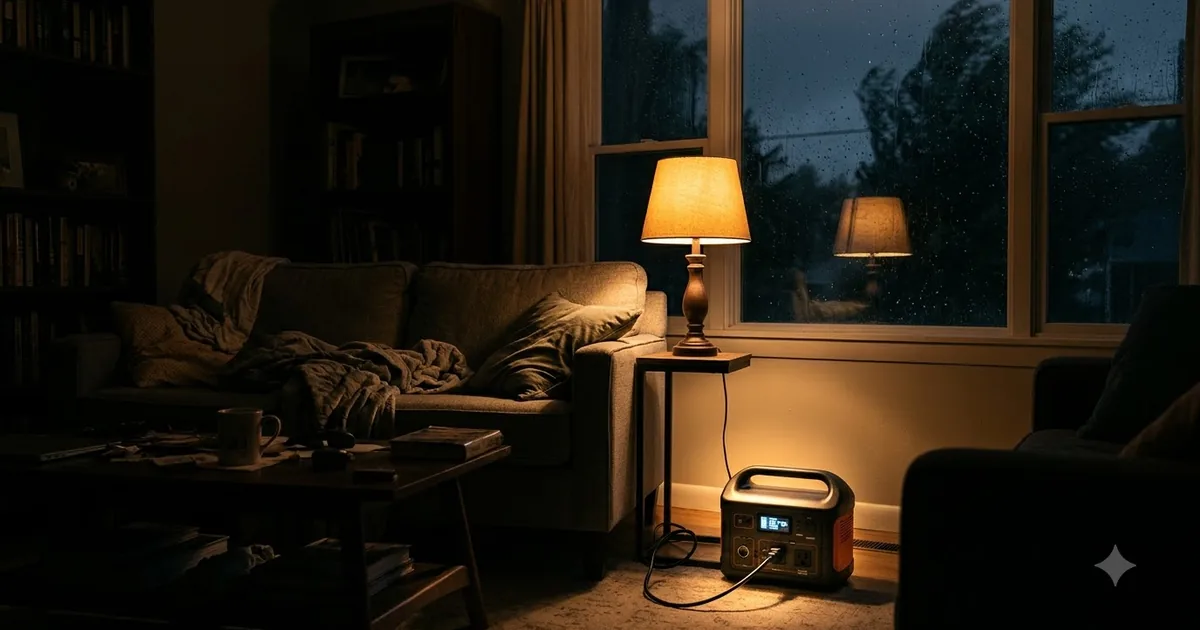
This guide is based on manufacturer specifications, published information and buyer feedback. We do not claim hands-on testing. Always follow the instructions that come with your own equipment.
Atlantic hurricane season runs from June 1 to November 30. Outages can last days after a major storm, so plan before one is forecast.
Backup power checklist
- Decide your essentials. Phones, router, lights, a fan, medical equipment and possibly a refrigerator.
- Size your power station. Use our sizing guide and runtime calculator.
- Charge everything early. Charge power stations, power banks and phones before the storm.
- Plan recharging. Solar panels can help during a long outage. See solar panels needed.
- Keep cables ready. Charging cables, extension cords and adapters in one bag.
- Protect the equipment. Keep it dry and off the floor in case of flooding.
Other supplies
- Flashlights and spare batteries
- Water and non-perishable food
- First-aid kit and prescriptions
- Battery or hand-crank radio
- Important documents in a waterproof bag
Generator safety
If you also use a gas generator, run it outdoors only and well away from windows, doors and vents. Carbon monoxide is a serious danger.
After the storm
Do not plug backup power into your home wiring without a proper transfer switch installed by a licensed electrician. Use official sources for food safety and returning home.
Timeline: before, during and after
- Days before: charge everything, test your power station, gather cables, fuel and supplies.
- The day before: move equipment to a high, dry place and top up devices.
- During the storm: stay safe, use power sparingly, and keep communications charged.
- After: watch for downed lines, use official guidance, and recharge your unit when power or sun is available.
Keeping devices charged
Phones and a router are the most useful items for staying informed. Use USB ports directly on the power station to save energy.
Work out your power budget before the storm
Write down the devices you must keep running and roughly how many hours each one runs per day. Phones, a router and lights are usually the core. A fridge, a fan or a medical device adds to the total. Multiply the watt-hours by the number of days you want to cover, then add a margin for losses and bad weather. This gives a realistic target for the size of your power station and the recharge options you need.
Food, water and medicine
Keep the fridge and freezer closed as much as possible, because an unopened fridge holds cold longer. If the power stays off, follow official food-safety guidance on what to keep and what to discard. Store medicines that need refrigeration according to the label or your pharmacist’s advice, and keep a written list of medicines and doses with your documents.
Plan for medical equipment
If you depend on electrically powered medical equipment, contact your healthcare provider and the equipment maker well before the season starts. Ask whether a battery backup is appropriate, how long the equipment will run, and what to do if the battery runs low. Put the plan in writing and share it with someone who can help.
Keep the equipment dry and ventilated
Store the power station on a raised, dry surface, away from windows, doors and any water that may collect on the floor. Use it in a dry, ventilated room, not in a closed cupboard or a damp basement. Do not operate any electrical equipment while you are standing in water. Keep cables off the floor, and inspect them for damage after the storm before reuse.
Communication and information
- Keep a battery or hand-crank radio tuned to your local emergency broadcasts.
- Agree on a meeting point and a contact person outside the storm area.
- Save key phone numbers on paper, in case the phone battery runs low.
- Charge power banks in advance, so each family member has backup power.
After the storm
Before you reconnect anything, check the building and the surrounding area for hazards, and wait for official guidance before returning home. When the power comes back, unplug sensitive electronics and give the grid time to stabilise, since a surge can damage devices. Recharge the power station fully before you put it away, and note what worked so you can improve your plan next time.
Frequently asked questions
How big a power station do I need for a hurricane?
It depends on what you power and for how long. Many households choose 1,000 Wh or more for essentials. See the sizing guide.
Can I run a window air conditioner?
Only on larger power stations with enough output and capacity, and only for a limited time.
Can I run a power station indoors during a storm?
Run it only in a dry, ventilated room, away from windows and water, and follow the manual. Never run a fuel-burning generator indoors.
How many days of power should I plan for?
Plan for the longest outage your area commonly sees, then add a margin. Official local guidance is a better reference than any fixed number.
Can I charge the power station from a car during an emergency?
Some units support car charging. Run the vehicle engine outdoors only, and never idle it in a garage or any enclosed space.
Medical equipment: if you plan to run a CPAP machine or other medical equipment from a portable power station, check the device manufacturer’s guidance first and keep a backup plan. A power station is not a medical-grade or guaranteed uninterruptible power source, and this guide is not medical advice.
Popular buying guides
About the author
The Home Backup & Outage Desk covers sizing, runtime and preparation for power outages, storms and home backup, using manufacturer specifications and public outage data.