
Power Outages in California: Backup Power Guide with a Portable Power Station
Power outage preparation for California: common causes, what a portable power station can run, how to size one and safety tips. Check official sources for local alerts.
 By Home Backup & Outage Desk
Updated November 14, 2026
This guide is based on public information and manufacturer specifications. We do not claim hands-on testing. For emergency instructions, always follow your local emergency management office, the National Weather Service and Ready.gov.
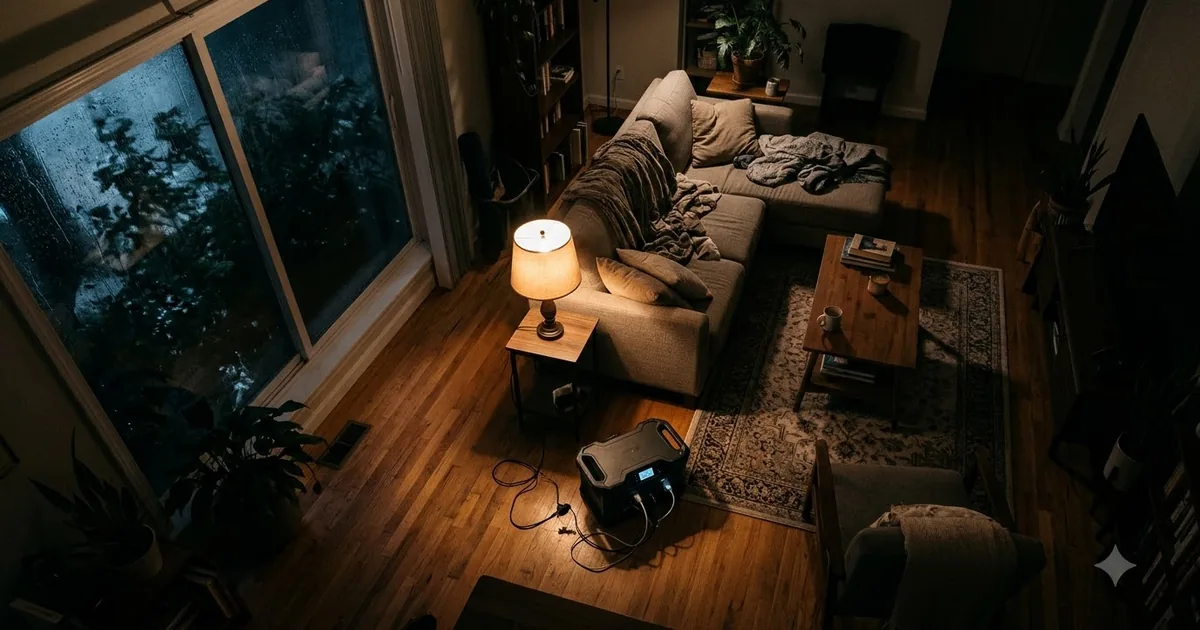
California utilities sometimes shut off power during high fire danger, and heat waves and winter storms can also cause outages. A power station keeps essentials running.
What can cause outages in California
- Planned power shutoffs during high fire danger
- Wildfire damage to infrastructure
- Heat waves that strain the grid
- Winter storms and high winds
What a portable power station can cover
A portable power station is well suited to short and medium outages: keeping a router, phones, lights and a laptop going, running a fan, and keeping a refrigerator going for part of the day on a larger unit. Heating, cooking and central air conditioning usually need much more power. See can a power station power a house.
How to size one
- List your essential devices and their watts.
- Estimate the hours you want to cover.
- Use our sizing guide or runtime calculator.
Many households start with a 1,000 Wh class unit for essentials and add solar to recharge. See how many solar panels you need.
California outage preparation, from official sources
- Power sources and charging. Ready.gov says to “plan for batteries and other alternative power sources to meet your needs when the power goes out” and lists “a portable charger or power bank” as a charging option (Ready.gov, Power Outages).
- Generators and carbon monoxide. Ready.gov says generators and fuel “should always be used outdoors and at least 20 feet away from windows, doors and attached garages,” and to install working carbon monoxide detectors on every level of your home.
- Food in the fridge. According to Ready.gov, a refrigerator keeps food cold for about four hours and a full freezer for about 48 hours; throw out food if its temperature is 40 degrees or higher.
- Planned shutoffs. The California Public Utilities Commission publishes information on utility de-energization (Public Safety Power Shutoffs). Check your own utility for how it notifies customers and for any program for people who rely on powered medical equipment.
What this means for a power station: a shutoff can last longer than a small unit can cover, so keep it charged during fire season and decide what you will power first.
Quick picks for a California outage kit
These items cover the basics: power for essentials, a small backup battery, and a way to recharge. We picked them from products already listed on this site, using the retailer listings only; we have not tested them. Check the current price and specs before you buy.
| Pick | Why it is here | ||
|---|---|---|---|
 | LIBRIDS Portable Power Station C600 Small power station for essentials | The listing describes a 640Wh unit with 600W output and four AC outlets (up to 8 devices in total). Enough, on paper, for a router, phones, lights and a fan; not for central air conditioning or electric heat. | See on Amazon |
 | Goal Zero Venture 75 Power Bank Backup battery with a flashlight | A 19,200mAh power bank with 60W USB-C Power Delivery, an IP67 rating and a built-in flashlight, according to the listing. Good for phones and small USB devices, not for appliances. | See on Amazon |
 | Renogy 100W Portable Solar Panel Recharging when the grid is down | A 100W foldable panel with USB-C and USB-A outputs, per the listing. Check that its connector and voltage match your power station before you buy. | See on Amazon |
As an Amazon Associate we earn from qualifying purchases.
California tips
Sign up for your utility’s alerts so you know about planned shutoffs, and keep the power station charged during fire season. Solar panels can help recharge during longer shutoffs.
Where to find official information
- Your electric utility’s outage map and alerts
- The National Weather Service forecast for your area
- Your state and county emergency management office
- Ready.gov for preparedness checklists
- The U.S. Energy Information Administration (EIA) for reliability data
Safety reminders
- Never run a gas generator indoors or in an attached garage.
- Do not back-feed your home through a wall outlet.
- If you rely on medical equipment, follow the equipment maker’s guidance and talk to your healthcare provider.
Frequently asked questions
How long can a power station run my essentials?
It depends on capacity and load. Divide usable watt-hours by your total watts to estimate hours.
Should I buy before a storm is forecast?
Yes if you can. Supplies and delivery can be limited right before a storm. See the hurricane power outage checklist.
Medical equipment: if you plan to run a CPAP machine or other medical equipment from a portable power station, check the device manufacturer’s guidance first and keep a backup plan. A power station is not a medical-grade or guaranteed uninterruptible power source, and this guide is not medical advice.
Sources
- Ready.gov, Power Outages, read 20 October 2026.
- California Public Utilities Commission, De-energization.
Last updated: 20 October 2026.
More guides you may like
Popular buying guides
About the author
The Home Backup & Outage Desk covers sizing, runtime and preparation for power outages, storms and home backup, using manufacturer specifications and public outage data.